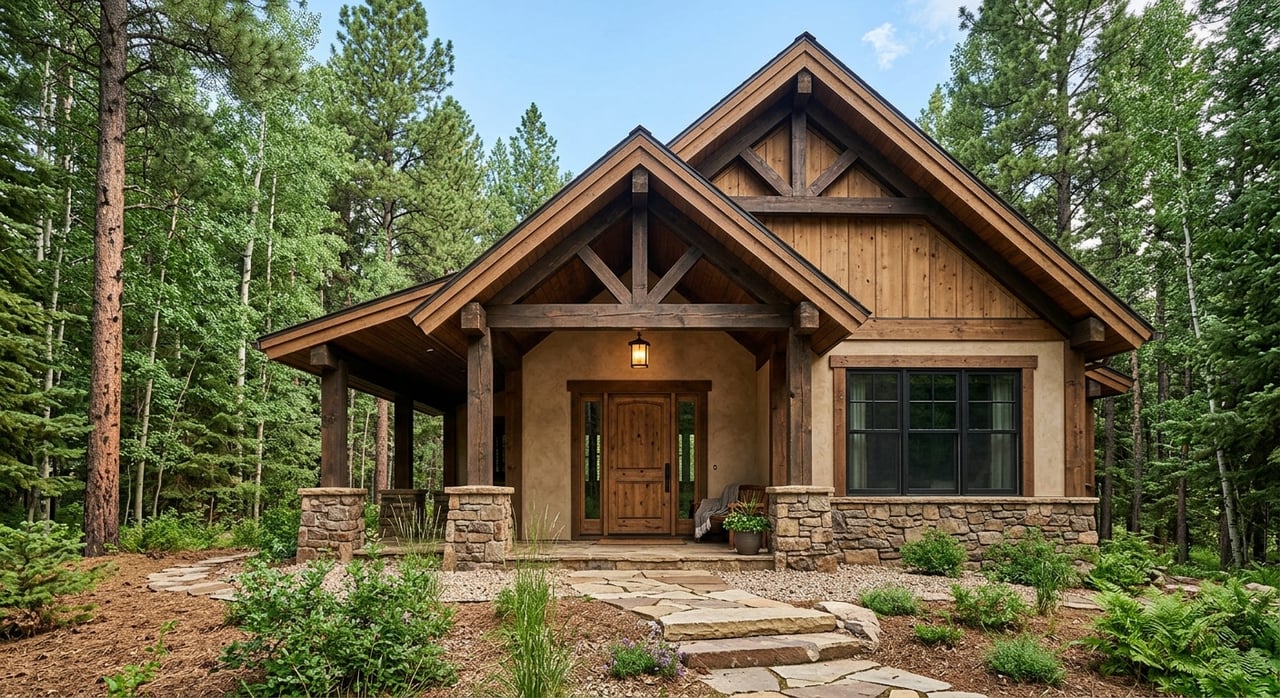
Flagstaff vs Sedona Real Estate: Which Market Fits You?
Trying to choose between Flagstaff and Sedona? You are not alone. Both are Northern Arizona mountain markets with strong lifestyle appeal, but they offer very different price points, climates, and investment dynamics. If you are deciding where to buy a primary home, second home, or revenue property, this guide will help you compare the two with more clarity. Let’s dive in.
If you zoom out, the biggest difference is market scale and price. Flagstaff had an estimated population of 77,539 in 2024, while Sedona had 9,778. In March 2026, Flagstaff’s median sale price was $710,000, compared with $1.32 million in Sedona.
The pace is different too. Homes in Flagstaff took a median 86 days to sell, while Sedona homes took 56 days. Price per square foot also shows the gap, with Flagstaff at $391 and Sedona at $523.
For you as a buyer, that usually means Flagstaff feels like a broader everyday market with more room to compare options. Sedona tends to feel tighter, more premium, and more driven by scarcity. That is not a formal market label, but it fits the population and pricing spread.
Your budget will likely narrow this decision quickly. In Flagstaff, recent zip-code medians ranged from $614,000 in 86004 to $900,000 in 86005 and $1.21 million in 86003. Within the city, neighborhood medians ranged from about $489,500 in Smokerise Valley to $2.1 million in Pine Canyon.
Sedona also has range, but the center of the market sits higher. Recent zip-code medians showed $384,000 in 86335, $925,000 in 86351, and $1.195 million in 86336. Current listing examples also ran from a $425,000 condo to homes above $2 million.
The practical takeaway is simple. Flagstaff appears to offer more buyer entry points, while Sedona’s core inventory clusters more around higher-price homes, often with strong scenery appeal. If you want more flexibility across price bands and property types, Flagstaff may give you a wider starting field.
Flagstaff sits at about 7,000 feet and delivers a true four-season mountain setting. Discover Flagstaff reports 266 days of sunshine, about 22.96 inches of annual precipitation, and 108.8 inches of annual snowfall. NOAA normals for the Flagstaff 4 SW station show an annual mean temperature of 44.7°F and annual snowfall of 65.3 inches.
In day-to-day terms, that means cooler summers and real winter conditions. If you want snow, cold-weather recreation, and a classic mountain-town rhythm, Flagstaff is the clearer fit.
Sedona sits around 4,500 feet in the Upper Sonoran Desert. According to the city’s official tourism guide, January averages are 51°F and 21°F, July averages are 93°F and 63°F, and annual precipitation is about 19 inches.
That translates to milder winters and far less snow than Flagstaff. If you want easier year-round access, warmer winter weather, and a red-rock desert-meets-mountain setting, Sedona has the advantage.
For many buyers, this decision is not just about numbers. It is about how you want your weeks and weekends to feel.
Flagstaff is often the stronger match if you want a larger resident base, college-town energy, cooler summer weather, and winter recreation. Northern Arizona University is a major local presence, with spring 2025 enrollment reported at 25,748, which adds to the city’s steady activity and housing demand.
Sedona tends to appeal more if you want dramatic red-rock scenery, a smaller market footprint, and a lifestyle tied to tourism, arts, recreation, and second-home ownership. The city’s tourism guide notes that Sedona’s economy is anchored by tourism, hospitality, recreation, retail shopping, and arts, and it highlights 80-plus art galleries.
Neither choice is universally better. The better choice is the one that fits how you want to spend time, what kind of property experience you want, and how much market competition your budget can handle.
If you are buying with income in mind, Flagstaff and Sedona can perform for different reasons. The key is understanding what drives occupancy and how those drivers align with your strategy.
Flagstaff benefits from several overlapping demand engines. Northern Arizona University supports housing demand, and the city also draws year-round tourism and winter recreation. Discover Flagstaff notes that it is about 80 miles south of Grand Canyon National Park, and the National Park Service reported 4,919,163 Grand Canyon visits in 2024.
That mix can make Flagstaff attractive if you are looking at rentals tied to students, regional travel, outdoor recreation, or seasonal visitors. It also supports a more diversified demand picture than a market built around just one visitor profile.
Sedona’s demand is more concentrated around tourism and lifestyle appeal. The city describes its economy as anchored by tourism, hospitality, recreation, retail shopping, and arts. It also points to a strong seasonal-visitor and second-home presence.
For you, that can mean a market where views, setting, and guest experience matter a great deal. It can also mean that asset selection is especially important, since location and property presentation may have an outsized impact on value and revenue potential.
If short-term rentals are on your radar, local compliance should be part of your search from day one. In both cities, operating rules are not a side detail. They are part of how you evaluate the property.
In Flagstaff, owners must obtain a Short Term Rental License, maintain a TPT license, and complete annual neighbor notification. The city says this ordinance took effect in November 2023.
That means you should not assume a property is ready to operate just because the layout works for guests. You need to account for licensing and ongoing compliance as part of your acquisition plan.
In Sedona, owners must obtain a city permit and TPT license, maintain at least $500,000 in liability insurance, notify neighbors, and follow additional operating rules. The city also prohibits special events at short-term rentals and uses a 24/7 hotline for complaints and compliance issues.
Sedona’s FAQ states that even renting a home for one day per year requires a TPT license and Sedona STR permit. For investors, that is a major point. It shows why regulation needs to be reviewed before you model income, not after you close.
If you are torn, use a simple framework based on your goals.
On paper, Flagstaff and Sedona are easy to compare. In real life, the biggest differences show up at the property level. Zip code, neighborhood, property type, intended use, and short-term rental rules can all change the picture quickly.
That is especially true if you are buying from out of state, comparing second-home options, or trying to balance lifestyle goals with rental income. A broad market summary helps, but your best decision usually comes from narrowing the search to the right asset and the right location.
If you want help comparing Sedona against Flagstaff through the lens of price, use case, and short-term rental strategy, connect with Martin de Bókay to schedule your Sedona investment consult.


Get assistance in determining current property value, crafting a competitive offer, writing and negotiating a contract, and much more. Contact me today.