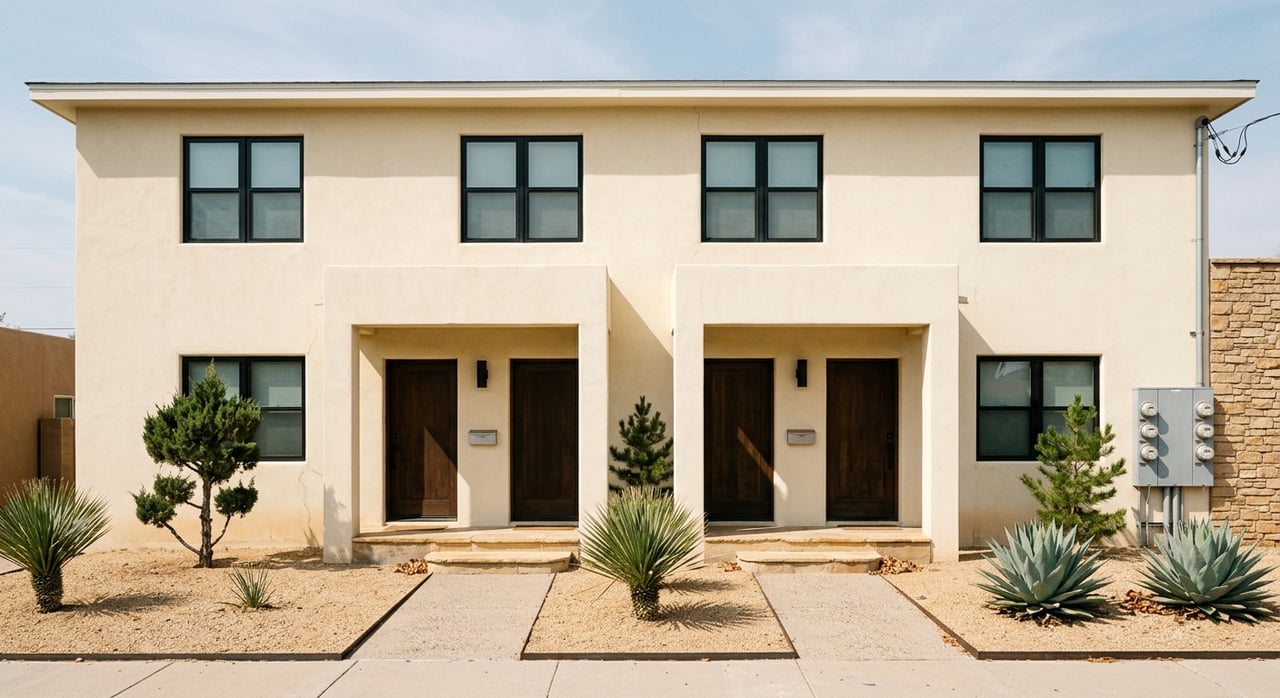
Prescott AZ Multifamily Investing for Small Properties
If you are looking for a small multifamily investment in Prescott, you are not chasing a huge inventory pool. You are looking at a niche market where duplexes, triplexes, and fourplexes can fill a real local housing need, but only if you underwrite them carefully. The good news is that Prescott offers solid demand drivers, practical zoning paths for smaller multifamily projects, and rent benchmarks that can help you make smarter decisions. Let’s dive in.
Prescott is a relatively small and older housing market, with an estimated 2024 population of 48,224 and an owner-occupied housing rate of 68.1%, according to the U.S. Census QuickFacts for Prescott. That smaller scale matters because inventory is limited, and deals do not always come along in volume.
At the same time, local housing needs support the case for smaller rental properties. The city’s 2025-2029 Consolidated Plan notes that 29.2% of local households fall into the housing affordability gap. That means duplexes, triplexes, and fourplexes are not just investor assets. They can also serve as part of the broader workforce housing picture in Prescott.
Prescott’s demographics also matter when you think about unit mix. The city reports an average household size of 1.94 persons, and its Consolidated Plan describes a population with a median age of 60.3 and 40.5% of residents age 65 and older. In practical terms, that often supports demand for smaller, lower-maintenance units and layouts that are easier to navigate.
When you evaluate a small multifamily property in Prescott, it helps to start with both broad market rent data and bedroom-based benchmarks. Citywide, Prescott’s median gross rent is reported by the Census at $1,304.
For a more unit-specific lens, the city’s Consolidated Plan cites HUD FY2026 Fair Market Rents for the Prescott Valley-Prescott MSA at:
These numbers are not a promise of what every property will achieve. They are useful reference points for underwriting. In Prescott, 1-bedroom and 2-bedroom units deserve especially close attention because of the city’s smaller average household size and older population.
It is easy to overestimate rent growth on a value-add deal. Prescott does have meaningful housing demand, but it also has renters who are often budget-sensitive. The Consolidated Plan says 46.6% of renters spend more than 30% of income on housing, which is a reminder to model rents conservatively.
A smart approach is to test your numbers against current condition, actual unit size, parking, utility setup, and renovation scope. If the deal only works with aggressive rent assumptions, it may not be as resilient as it first appears.
Vacancy data can look confusing in Prescott if you read it too quickly. The city reports 3,056 vacant housing units, or 11.8% of total stock, but more than 70% of those vacant units are seasonal, according to the city housing plan. That means a large share of vacancy is not direct, year-round rental competition.
For market-rate apartments, the same report cites a 6.2% vacancy rate in Q1 2025, which sits close to what many investors would view as a more normalized stabilized range. That suggests the apartment market is not overly loose.
At the state level, Arizona’s annual rental vacancy rate was 8.4% in 2025, down from 8.8% in 2024. Compared with that statewide figure, Prescott’s apartment vacancy appears somewhat tighter.
You should not treat all reported vacancy as equal. In Prescott, seasonal housing skews the big-picture vacancy number, so your deal analysis should focus more on year-round rental competition and the actual unit type you plan to own.
For a duplex, triplex, or fourplex, that means you should build in:
Before you get attached to a property, verify what the site can legally support. Prescott’s Planning & Zoning Division reviews projects under the Land Development Code and General Plan, and the city provides zoning lookup tools plus free pre-application conferences on Thursdays.
That is especially useful if you are considering a conversion, addition, infill build, or a property with underused land. Early confirmation can save you from buying a parcel that does not support your intended use, density, or parking plan.
In Prescott’s RT district, the Land Development Code explicitly addresses small multifamily forms. The code includes minimum lot areas of:
The same standards include a 35-foot height limit and indicate that rear-yard or alley parking is preferred where practical. These details matter because a property can look promising on paper but fall short once parking, setbacks, and lot dimensions are applied.
In a smaller market, speed still matters. If your investment plan depends on renovation and repositioning, permit timing should be part of your acquisition math.
Prescott’s building permit timelines currently show:
Those are city review timelines, not guaranteed total project durations. You still need to account for plan revisions, engineering, contractor schedules, and any fire or specialty approvals tied to the scope.
For many small multifamily investors in Prescott, rehab can offer a more practical path than ground-up development. New construction can work, but it usually involves a longer path, more capital, and tighter execution.
A well-bought duplex or fourplex with functional layouts and manageable deferred maintenance may offer faster stabilization. That does not mean rehab is easy. It means the timeline can be more predictable if your due diligence is strong.
Prescott has a meaningful share of older rental inventory. The city reports that about 45% of renter-occupied units were built before 1980, and it notes that pre-1980 housing may present lead-based paint hazards in the Consolidated Plan.
That does not make older duplexes or triplexes bad investments. It simply means your renovation budget needs to look beyond cosmetic upgrades. In many cases, the real value is created by solving functional issues before trying to push rents.
For small multifamily properties in Prescott, pay close attention to:
If those major systems are not addressed, rent growth can be harder to sustain and surprise expenses can eat into returns quickly.
Operations matter just as much as the buy. In Arizona, residential rentals are governed by the Arizona Residential Landlord and Tenant Act, and the Arizona Department of Real Estate states that compensated property management under a written agreement requires a real estate license.
For most small multifamily owners, the choice is straightforward. You can self-manage your own property, or you can hire a licensed property manager. The right fit depends on how hands-on you want to be, how close you live to Prescott, and how much time you can commit to tenant communication, maintenance coordination, and compliance.
If you are an out-of-state investor, this decision becomes even more important. A property that looks strong on paper can underperform if management is reactive, slow, or inconsistent.
Small multifamily investing in Prescott is best approached as a limited-supply, older-stock niche with real but not unlimited rent support. That means the best opportunities are usually the ones where your numbers stay solid even with conservative assumptions.
Use this checklist before you move forward:
Prescott can make sense for duplex, triplex, and fourplex investors who want a smaller Northern Arizona market with durable housing demand and a clear local need for practical rental options. The opportunity is not about chasing unlimited rent growth. It is about buying the right asset, understanding local constraints, and managing rehab and operations with discipline.
If you want help evaluating a Prescott-area small multifamily opportunity, identifying red flags before you write an offer, or getting connected with local resources for your next acquisition, reach out to Martin de Bókay. He can help you approach the deal with a local, investor-focused lens.


Get assistance in determining current property value, crafting a competitive offer, writing and negotiating a contract, and much more. Contact me today.