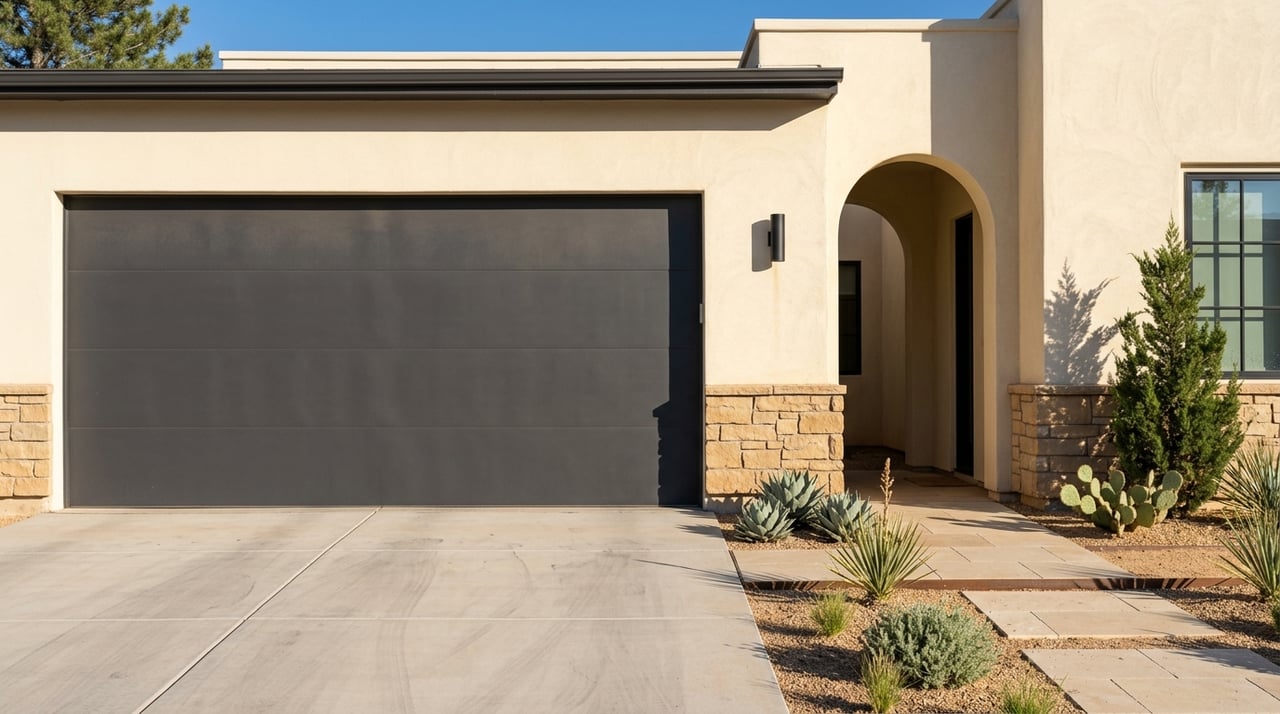
How to Evaluate a Sedona Short Term Rental Investment
If you are eyeing a Sedona home as a short-term rental, the biggest mistake is assuming the numbers start with nightly rate. In Sedona, short-term rental potential is decided first by compliance, layout, and location-specific fit. A home can look great on paper and still fall short if the permit path is messy, parking is tight, or a casita is not actually eligible. This guide will help you evaluate Sedona homes the way a careful buyer should, so you can screen opportunities with more confidence. Let’s dive in.
Sedona is not an emerging short-term rental market. It is already established, regulated, and closely monitored. In a June 2025 city update, Sedona reported 1,219 permitted STR properties, 96.5% permit compliance, and STRs making up 17.6% of total housing inventory, which shows how active and visible the sector already is, according to the City of Sedona update.
That matters because your question is usually not, “Can I do STRs in Sedona?” The better question is, “Can this specific property operate legally and competitively?” Arizona does not allow cities to ban STRs outright, but Sedona still applies permit, safety, tax, and operating rules that can make or break a deal, as explained in the city’s STR overview.
Before you think about design upgrades or revenue projections, confirm that the property is even eligible for STR use. Sedona defines a short-term rental as the rental of part or all of a legally permitted dwelling unit for fewer than 30 consecutive days. Rentals of 30 days or more do not require an STR permit, based on the city FAQ.
Eligible property types include single-family homes, condos, townhouses, co-ops, one-to-four-unit properties, rooms within those dwellings, and some guest houses or casitas. Structures like garages, sheds, RVs, tents, and apartment complexes with five or more units are not eligible, according to the same Sedona FAQ page.
This is why a listing description should never be your only source. You want to verify how the property is actually permitted and whether every advertised space is a legal dwelling unit.
Sedona requires more than a simple city registration. Before applying for a city STR permit, an owner must first obtain an Arizona Transaction Privilege Tax license through AZTaxes.gov, as outlined by the Arizona Department of Revenue. Then the owner must apply for a Sedona permit for each advertised rental unit.
The city says the annual permit fee is $210 per rental unit, owners must carry at least $500,000 in liability insurance, secure any required building safety approvals, and notify adjacent single-family owners. Every listing must also display the city permit number, according to the property owner responsibilities page.
Tax location is another detail you do not want to miss. Sedona spans both Yavapai and Coconino counties, and the city’s FAQ lists different tax totals depending on county. Yavapai County properties are listed at 13.325%, while Coconino County properties are listed at 13.90%, based on the city’s STR guidance.
This point deserves extra attention if you are buying an existing vacation rental. In its June 2025 update, Sedona said STR permits are not transferable in any form, including through LLCs. The city also noted that it stopped dismissing STR citations for code violations in 2025, as stated in the city update.
In plain terms, you should not pay a premium for a property based on the assumption that an existing permit comes with it. You need to underwrite the home as if you will need to qualify it yourself after closing.
In Sedona, extra living space can add value, but it can also create confusion. A guest house, casita, or ADU may not automatically be STR-eligible just because it exists or has been used that way in the past.
The city’s June 2025 update says most residentially zoned properties are limited to two habitable structures. It also says ADUs built after December 2024 can be used as STRs only if the owner lives on site, while some earlier guest quarters may qualify and pre-2017 ADU permits were never allowed to be used as STRs. The city recommends verifying any exception directly with planning before marketing the unit, according to the same city update.
If a property’s value depends on renting both the main house and a second unit, this step is essential. A bad assumption here can change your whole investment picture.
Even if a property meets city rules, that does not mean the HOA allows STR use. Sedona makes this clear in its FAQ and notes that owners must check HOA rules themselves because the city does not maintain or enforce those private restrictions, per the vacation rentals FAQ.
That means your underwriting should include a full review of CC&Rs, rules, and any rental restrictions. For condos, townhomes, and planned communities, this is one of the fastest ways to avoid wasting time on the wrong property.
In Sedona, parking is not a minor detail. It is one of the most practical operating variables you can assess before you buy. The city specifically flags parking problems in its complaint guidance and says guests cannot block driveways, neighboring property, or the throughway of a public street, according to the city FAQ.
When you tour a home, look past the listing photos and ask practical questions:
Two similar homes can perform very differently if one has easy parking and the other creates guest stress from the moment people arrive.
A strong STR floor plan is about how people actually use the home. Separate sleeping areas, enough usable bathrooms, and a logical kitchen and living setup all affect guest comfort. In a market like Sedona, where many buyers compare homes by square footage alone, layout can be a bigger differentiator than size.
Outdoor space matters too. Sedona is marketed first as an outdoor destination, with tourism centered on scenery, recreation, and access to Red Rock Country, as highlighted by Visit Sedona’s destination overview. A home with a shaded patio, a usable deck, privacy, or easy indoor-outdoor flow may stand out more than a larger house with less functional exterior space.
Durability is another real factor. Because Sedona’s permit rules involve building safety approvals and the city actively enforces operating standards, finishes and features that are attractive but easy to maintain can make ownership smoother over time, based on the city’s owner responsibilities.
A legal STR can still be a weak investment if it creates frequent tension. Sedona’s complaint system addresses issues like noise, parking, trash, lighting, and prohibited event activity, according to the city FAQ. The city also prohibits special events at STRs, including weddings, retreats, conferences, trainings, and workshops, and says violations can lead to penalties, suspension, or permit revocation, based on the property owner rules.
That means you should think carefully about the site itself. Homes on narrow streets, with close setbacks, awkward shared access, or very limited outdoor privacy may carry more operational risk than homes with better separation and circulation.
Sedona is compact, which makes small location differences more meaningful than they may appear on a map. The Sedona Chamber and Tourism Bureau notes that city limits are roughly 6 miles long by 3 miles wide, and many West Sedona attractions sit within a convenient 2-mile stretch of State Route 89A, according to Visit Sedona transportation guidance.
For guests, convenience often means more than straight-line distance. Homes with easier access to Uptown, State Route 89A, State Route 179, trailheads, and shuttle pickup areas may be easier to market and easier for visitors to enjoy. The local tourism bureau also notes that the visitor center assists more than 300,000 visitors a year and helps with maps, passes, and trip planning, while the shuttle system serves popular trailhead routes.
Sedona’s outdoor draw is a major part of that equation. Visit Sedona says the area is surrounded by nearly two million acres of national forest and four wilderness areas, and the Red Rock Pass program covers 19 day-use sites, including destinations such as Cathedral Rock, Bell Rock Vista, West Fork, and Crescent Moon Ranch, according to the destination overview.
The easiest way to avoid overpaying is to screen each property in the same order every time. Public data can help you do that before you get too far down the path.
Start by confirming parcel details and county location through public mapping and assessor resources. Yavapai County provides public ownership maps, parcel information, and GIS tools through the Assessor Cartography division.
Then work through this checklist:
That final step matters more than many buyers expect. Because Sedona maintains a public STR map, neighborhood-level context is unusually visible. That gives you a practical way to see whether a property sits in an area with heavier STR concentration or a more residential operating environment.
In Sedona, short-term rental potential is never just about views, finishes, or projected income. It comes down to whether the home can clear the city’s rules, fit the site well, support guests comfortably, and operate without constant friction. Two homes that seem nearly identical online can have very different outcomes once you verify permit eligibility, county taxes, parking, ADU status, HOA restrictions, and real-world access.
If you want help evaluating a Sedona property before you buy, Martin de Bókay can help you look at the details that matter most, from location fit and acquisition strategy to investor-focused guidance and local referrals that make the next step easier.


Get assistance in determining current property value, crafting a competitive offer, writing and negotiating a contract, and much more. Contact me today.