Trying to decide between a brand‑new build and a move‑in‑ready resale in the Village of Oak Creek? You’re not alone. Many second‑home buyers weigh views, timing, and total cost before choosing a path. In this guide, you’ll learn how VOOC’s terrain, permits, financing, insurance, and inspections shape the decision so you can move forward with confidence. Let’s dive in.
VOOC market snapshot
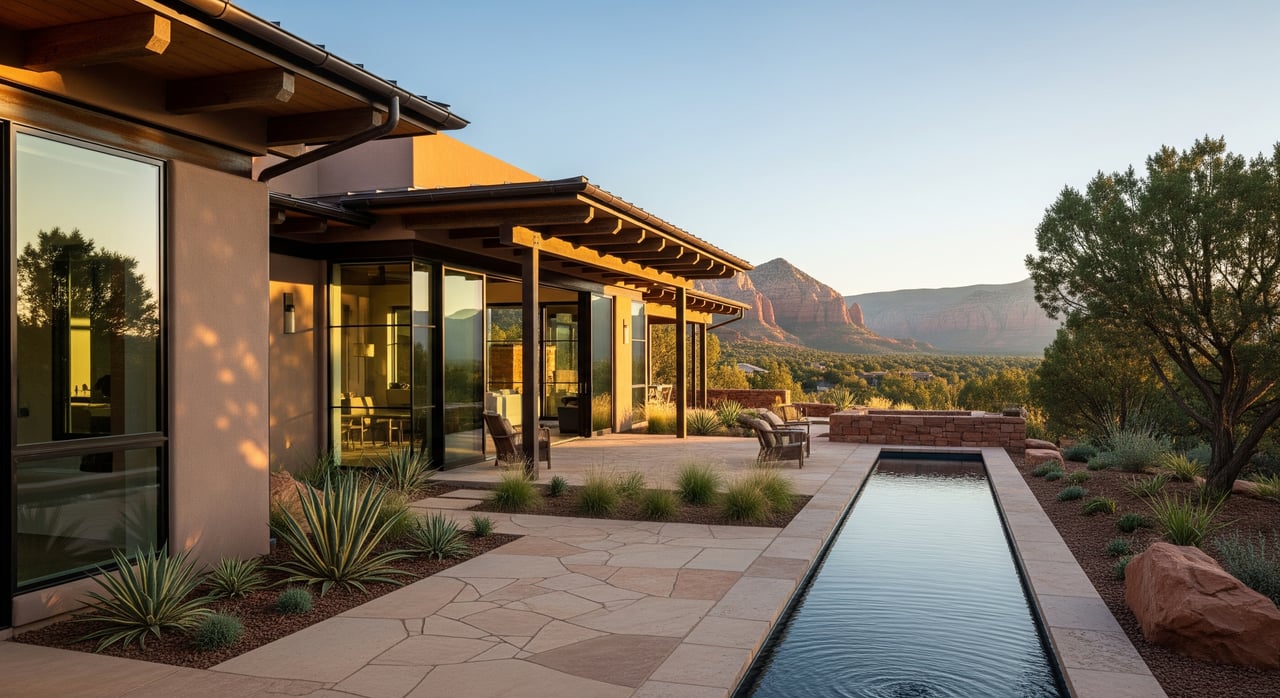
The Village of Oak Creek draws second‑home and vacation buyers for its red‑rock scenery, outdoor access, and easy drives to Phoenix and Flagstaff. View lots are limited, so inventory for the best vistas can be tight. That scarcity often pushes buyers toward well‑located resales or prompts them to pay premiums for new lots with protected sightlines.
You’ll see a mix of low‑maintenance spec homes and higher‑budget custom builds. Seasonality matters here. Many buyers prefer to schedule site visits, inspections, and closings outside peak tourism periods to keep logistics smooth.
Cost: new vs resale
What drives costs in VOOC
- New build total cost includes land, any lot premium for views and topography, construction contract, soft costs, and upgrades.
- Resale pricing depends on comparable sales, condition, and view class. Immediate maintenance or renovations can change the true cost.
- Lot conditions matter. Steep grades, rock excavation, and retaining walls can add time and dollars.
- Ongoing costs apply to both: HOA dues, property taxes, utilities, insurance, maintenance, and property management if you will not live here full‑time.
How to estimate total cost of ownership
- Pull recent comparable resales for similar neighborhoods and view categories in VOOC.
- Request an itemized builder estimate for a target lot: base price, inclusions, common upgrades, lot premium, impact and utility fees, and site‑work allowances.
- Model construction carrying costs: origination, interest‑only draws, interim insurance, and temporary utilities during the build.
- Project annual holding costs for 5–10 years: property taxes, HOA dues, insurance (factor wildfire risk), utilities, routine maintenance, and any management fees.
- For resales, add inspection findings, near‑term replacements, and planned remodeling to your comparison.
Where new builds can save
- Lower short‑term maintenance for the first few years when systems and finishes are new.
- Potentially better energy efficiency and insulation, which can reduce operating costs.
- Builder warranties that cover workmanship, systems, and structural components for defined periods.
Where resales can win
- Faster access and less uncertainty around timeline and final cost.
- Established landscaping, completed retaining structures, and proven drainage on sloped lots.
- Ability to negotiate based on inspection results and days on market.
Hidden costs to watch
- New builds: change orders, upgrade overages, extra site work, and extended carrying costs if delays occur.
- Resales: deferred maintenance, unpermitted work, septic or well issues, and roof/HVAC nearing end of life.
- Property taxes can change following new construction reassessment; verify with local authorities.
Timelines and process
New construction stages and timing
- Design and approvals: plan selection, HOA or architectural review, engineering, and geotechnical studies. A few weeks to several months depending on scope.
- Permitting: county building permits plus septic or well approvals if needed. Often 4 to 12 weeks or more based on completeness and workload.
- Build: site work, shell, systems, interiors, and final punch list.
- Typical timelines: spec homes about 4 to 9 months; custom homes about 9 to 18 months from permit to completion.
- Close after final inspections and certificate of occupancy.
Resale roadmap and timing
- Offer and negotiation based on market conditions.
- Inspections and repair talks generally take 1 to 3 weeks.
- Appraisal and underwriting often require 30 to 45 days.
- Typical close is about 30 to 45 days from contract if financing is standard.
Local factors that cause delays
- Topography and rock excavation that require additional engineering or retaining walls.
- Drainage and stormwater planning for sloped red‑rock lots.
- Environmental or cultural reviews where applicable.
- Wildfire‑mitigation features and defensible‑space planning that affect design and insurance readiness.
Inspections, warranties, and due diligence
New construction inspection plan
- Pre‑pour and pre‑drywall checks for foundation, framing, and rough‑ins.
- Geotechnical verification and drainage sign‑offs, especially for slopes and retaining structures.
- Utility confirmations: municipal water vs well testing; sewer vs septic design and permits.
- Energy and envelope review: insulation, windows, and HVAC sizing.
- Final inspection and punch list before closing.
Resale inspection focus
- Full home inspection, plus roof, HVAC, plumbing, electrical, and structural condition.
- Pest/termite evaluation and any history of treatment.
- Septic inspection and recent pumping records if not on sewer; well flow and water‑quality tests if not on municipal water.
Warranty differences
- New construction often includes tiered warranties: workmanship items for about one year, mechanical systems for a longer period, and structural coverage for major load‑bearing elements for several years. Always confirm exact terms and claim process.
- Resales rely on seller disclosures and any optional home warranty you purchase. After closing, repairs are your responsibility.
VOOC buyer checklist
- Verify water source and obtain well or municipal details; test water quality if applicable.
- Confirm septic permits, design, and inspection results; verify sewer availability when present.
- Review geotechnical reports for new builds or check evidence of stable grading and drainage for resales.
- Note wildfire‑hardening features: roof materials, ember‑resistant vents, and defensible space.
- Confirm utility access and road maintenance agreements for more remote parcels.
- Read HOA CC&Rs and architectural rules, including any short‑term rental policies.
Financing and insurance
Second‑home financing for resales
- Conventional second‑home loans are common with specific occupancy rules and down payment requirements.
- Lenders may require additional cash reserves compared to primary residences.
- If you plan to rent the property short‑term, program eligibility and underwriting can change.
Financing new construction
- Construction or construction‑to‑permanent loans are typical. Expect higher down payments and interest‑only draws.
- Draw schedules, inspections, and documentation add steps compared to a resale mortgage.
- Budget for fees at origination and during each funding stage.
Insurance and wildfire risk
- VOOC sits in a Wildland‑Urban Interface, so insurers often require wildfire‑mitigation features and defensible space.
- Premiums and availability can vary by parcel and proximity to fuels. Newer homes with hardened features may be easier to insure.
- For builds, verify course‑of‑construction coverage and who carries it during each phase.
Permits, utilities, and HOAs
- Yavapai County oversees building permits, setbacks, and septic approvals. Plan for review timelines and submittal quality.
- Septic sizing, well yields, and setbacks can limit buildable area on some lots.
- Many VOOC neighborhoods use architectural design review that shapes materials, colors, and landscaping.
Which path fits your goals
Choose new construction if you want a personalized design, lower short‑term maintenance, and potentially better energy performance, and you can accept a longer timeline and build‑phase complexity. Choose a resale if you value certainty, faster occupancy, mature landscaping, and verified drainage and access.
If you are aiming for short‑term or seasonal use, weigh HOA rules, insurability, and location convenience. For view‑driven buyers, verify sightline protections and budget for potential lot premiums or remodeling to capture those vistas.
Practical next steps
- Clarify timeline and use: personal retreat, occasional rental, or both.
- Price the full picture: construction or resale costs plus 5 to 10 years of operating expenses.
- Line up financing early: second‑home mortgage or construction‑to‑perm options.
- Get quotes for insurance that reflect wildfire risk and mitigation steps.
- Schedule site walks to assess grading, drainage, access, and HOA design controls.
- Build your due diligence team: inspector, septic/well specialists, insurance broker, and a builder or contractor if considering new construction.
Ready to compare properties, cost scenarios, and timelines side by side? Reach out to Martin de Bókay to schedule your Sedona investment consult. You’ll get local, investor‑minded guidance tailored to your VOOC goals.
FAQs
What’s different about VOOC when choosing new build vs resale?
- Limited view lots, sloped terrain, wildfire‑mitigation needs, and HOA design review can add time and cost to new builds while resales offer faster access and known site conditions.
How long does a custom home take to build in VOOC?
- Custom builds commonly run about 9 to 18 months from permit to completion, depending on design complexity, site work, materials, and review timelines.
What inspections should I prioritize for a VOOC resale with septic and a well?
- Order a full home inspection plus septic evaluation, recent pumping records, well flow and water‑quality tests, roof/HVAC checks, and a review of drainage and grading.
What warranties come with new construction near Sedona?
- Many builders offer tiers like about 1 year for workmanship, a longer period for mechanical systems, and structural coverage for several years; confirm exact terms and claim steps in writing.
How does wildfire risk affect homeowners insurance in VOOC?
- Insurers may require defensible space and hardened features and set higher premiums or stricter underwriting; newer or mitigated homes can be easier to insure.
Can I finance a VOOC new build as a second home?
- Yes, through construction or construction‑to‑permanent loans that typically require higher down payments, interest‑only draws, and more documentation than a standard resale mortgage.