Camp Verde AZ Water Rights in Real Estate: Key Facts
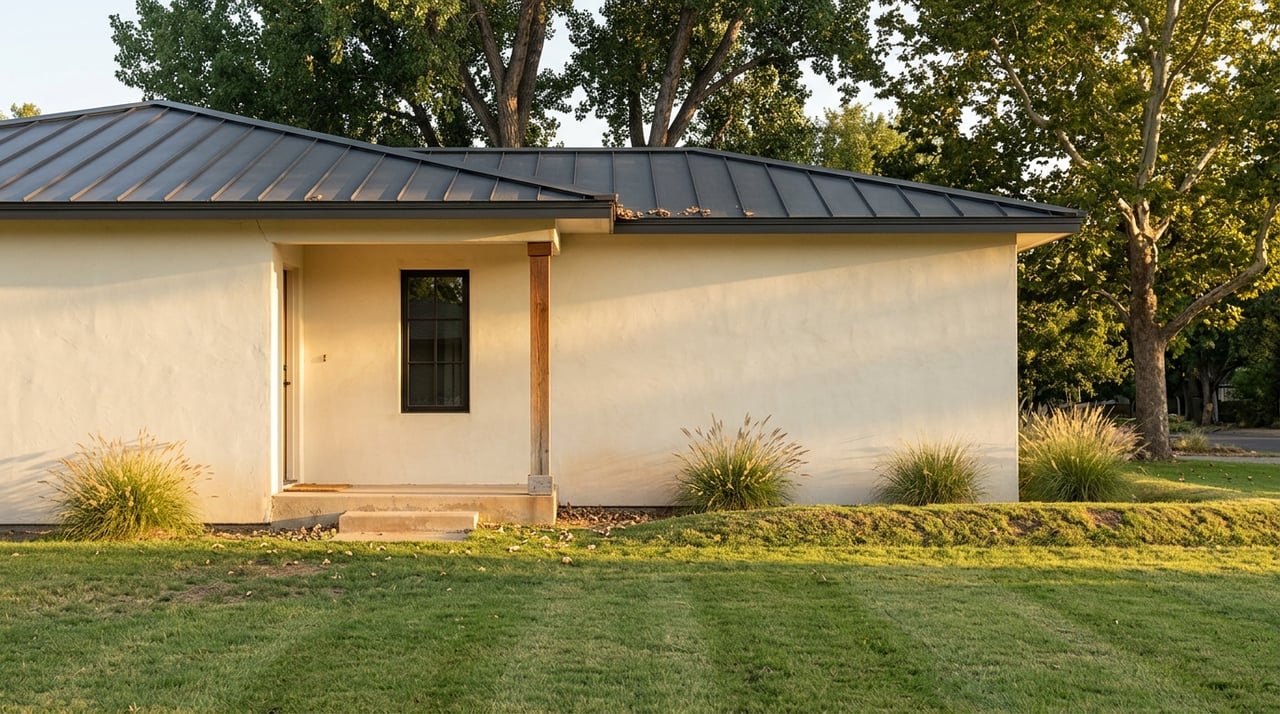
Drive two minutes off Salt Mine Road in Camp Verde and you can pass a home in Rio Verde Ranchos with giant cottonwoods, pipe rail fencing and a green pasture running to the property line, then hit a listing in Castle Heights with the same square footage, the same asking price per foot, and no irrigation at all. One backs onto a working ditch. The other needs a well. On paper, in a spreadsheet sorted by dollars per square foot, they look interchangeable. They are not.
That gap is the thing a median price cannot show you, and it is the reason a number that is technically correct can still send a buyer to the wrong conclusion.
Camp Verde closes somewhere between 9 and 15 home sales in a typical month. A small number of transactions can have an outsized effect on the reported median. When a single 16-acre riverfront estate closes in a given month, it can pull the reported median up by $150,000 or more, not because the town got more expensive, but because one big number landed in a small pool.
That is exactly what happened earlier this year. The 12-month trailing median sale price for Camp Verde sits at $356,250, up roughly 3% year over year, which is the number that actually tracks the trend. But a single recent month posted a median of $574,000, purely because of which properties happened to close. As of mid-August 2026, active listings on the local MLS were carrying a median list price of $371,000, with homes averaging 107 days on market and $324.99 per square foot, a snapshot that lines up much closer to the trailing figure than to that one unusually high month.
If you are watching Camp Verde from Phoenix or from out of state and you catch the market on the wrong month, you could walk away thinking the town costs 60% more than it actually does. That is not a rounding error. That is the difference between qualifying for a mortgage and not.
Even once you get past the noise and settle on a real number, that number still hides the fault line that actually separates Camp Verde properties from each other: water.
The Watershed Connection explains that Arizona water rights are appurtenant, meaning they belong to specific parcels of land rather than to the owner personally. In the Verde Valley, a large share of the irrigated acreage traces its water use back before the 1919 Arizona Water Code, and Salt River Project has been working with individual Verde Valley landowners to formalize that history through Historic Water Use Agreements, which get recorded with the county and put future buyers on notice. Roughly 85% of the ditch-irrigated land in the valley has documented historic use behind it. The other 15% is where things get complicated, and complications surface at the worst possible time: during a title search, an appraisal, or an SRP inquiry mid-escrow.
Here is what that looks like on the ground in Camp Verde. Some of the town's most established neighborhoods have irrigation. River Ranch Estates draws from the OK Ditch and includes a deeded community park with Verde River access. Rio Verde Ranchos and Jordan Meadows both sit on irrigated pasture with mature cottonwood and sycamore cover that only exists because water has been running to those lots for generations. Fort Lincoln Estates has mature trees on most of its parcels too. Castle Heights, by contrast, is a newer subdivision of view lots where electric service runs underground but water does not. Every home there depends on a private well.
None of that shows up in a price-per-square-foot comparison. Two 2,000 square foot homes at $370,000 can represent two entirely different assets, one with irrigation and one entirely dependent on how deep and how reliable its well turns out to be.
| Subdivision | Water source | What it means for a buyer |
|---|---|---|
| River Ranch Estates | OK Ditch irrigation | Deeded, recorded water use; community river access |
| Rio Verde Ranchos | Irrigated pasture | Established irrigation supports mature trees and green acreage |
| Jordan Meadows | Irrigated pasture, river frontage | Long-standing irrigated estates along the Verde River |
| Fort Lincoln Estates | Irrigated, most parcels | Mature trees are typical here; confirm per lot |
| Castle Heights | Private well only | Water quality and yield depend on the well |
This is also why a Camp Verde listing should never be priced off Sedona or Scottsdale comparables. Those markets do not have this variable in play the same way. Sedona's median sale price runs above $700,000 with inventory tight enough that acreage and water rights barely factor into the conversation, because there is so little of either to compare. Camp Verde is the opposite: a market where the land itself, not the square footage, decides half the price.
Red Rock News reported that the Verde Valley Community Development Organization briefed the Camp Verde council in January 2026 on a workforce housing plan for a 13.84-acre parcel along State Route 260 at Doug's Park Road. The land was donated by Kelly and Mona Sands of ICON Builders, valued at roughly $500,000, and VVCDO's plan calls for up to 45 single-family homes, contingent on the town approving a density increase from two homes per acre to five.
Whenever that zone change clears, it will be one of the more direct signals in years about where Camp Verde's entry-level inventory is headed, and it will almost certainly sit outside the irrigated-acreage tier this article is describing. Workforce housing built at five units an acre on a former open parcel is not going to carry deeded water rights to a ditch system that predates statehood. It is a different product for a different buyer, and worth watching separately from the acreage and riverfront segment where the real price dispersion lives today.
If you are comparing Camp Verde properties and trying to figure out why two similar homes are priced differently, or why one seems like an obvious deal, ask these questions before you get attached:
A sale-to-list ratio of 96 to 97% across Camp Verde tells you sellers who price accurately are getting clean results. It also means there is very little room in this market to hide a mismatch between water rights and asking price. Well-priced homes with river access or wine country proximity are selling in 30 to 60 days. Rural acreage with aspirational pricing, or properties missing key water documentation, can sit 150 days or longer while buyers quietly walk away after due diligence turns up a question nobody answered up front.
Is Camp Verde actually cheaper than Sedona? On a trailing 12-month basis, yes, meaningfully. Camp Verde's median sits around $356,250 against a Sedona median above $700,000. But comparing a single month's number without checking whether it reflects the trend, or whether it includes an outsized closing, can distort that gap in either direction.
Do all Camp Verde properties have irrigation? No. Established neighborhoods built around historic ditch systems, like River Ranch Estates or Rio Verde Ranchos, typically do. Newer view-lot subdivisions like Castle Heights typically do not and rely on private wells instead.
How do I verify water rights before closing? Ask for any recorded Historic Water Use Agreement tied to the parcel, confirm irrigation district or ditch company membership if applicable, and have a well tested for yield and quality if the property has no ditch access. This should happen during your inspection period, not after.
If you are weighing Camp Verde against Sedona or trying to figure out which side of the water line a specific listing falls on, that is exactly the kind of question local transaction history answers faster than a portal search. Martin de Bókay works these Verde Valley comparisons daily. Schedule your Sedona investment consult and bring the address. We will tell you what the ditch records actually say before you write the offer.
This article is general information, not legal, tax or financial advice. Consult a qualified professional about your situation.


Get assistance in determining current property value, crafting a competitive offer, writing and negotiating a contract, and much more. Contact me today.